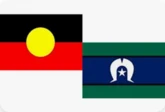

Why we put these flags here
Before anyone says a word, a place tells us whether we belong in it. A name said properly. A chair saved. A small flag at the bottom of a page. These things cost us almost nothing, and to the person looking for them they can mean a lot.
You may have clicked because you wondered. Thanks for asking.
What our sites say
We acknowledge the Traditional Custodians of the lands where we live and work, and pay our respects to Elders past and present. LGBTQIA+ people belong here.
The Aboriginal and Torres Strait Islander flags
Aboriginal and Torres Strait Islander peoples have cared for this country for tens of thousands of years, and they still do. We work from Perth, on Whadjuk Noongar country. An Acknowledgement of Country says we know that. Reconciliation Australia describes it as a way to show awareness of and respect for traditional owners. Anyone can give one.
Harold Thomas designed the Aboriginal flag, first flown in 1971. Bernard Namok designed the Torres Strait Islander flag, in 1992.
The rainbow flag
Plenty of people learn young to check a room before they relax in it. The flag, designed by Gilbert Baker in 1978, tells them they can stop checking here.
Being seen does us good
Belonging is not a nice extra. Psychologists Roy Baumeister and Mark Leary reviewed the evidence in 1995 and called it a fundamental human need, on the same footing as the others we plan our lives around.
In British Columbia, Michael Chandler and Christopher Lalonde compared First Nations communities and found far lower youth suicide where communities had worked to keep and rebuild their culture. In the United States, LGBTQ+ young people who had accepting homes, schools and communities reported fewer suicide attempts than those without.
These studies show a link, not proof, and nobody should claim a footer saves a life. They do show how much it matters to live among people who see us as we are. A flag is the smallest version of that. It is a start, and it settles nothing on its own.
It takes nothing from anyone
If these flags are not about you, you probably have your own version: a team, a town, a family name, someone who remembers how you take your tea. You know how that feels. Welcoming someone else leaves yours exactly where it was.
What we can give each other
Omxus runs on people looking out for the people near them. That starts with noticing. Learn how to say the name. Ask what someone needs, then believe the answer. Notice who is missing from the room. Most of what we need from each other is free.
If we got something wrong here, please tell us: [email protected]. We would rather hear it.